







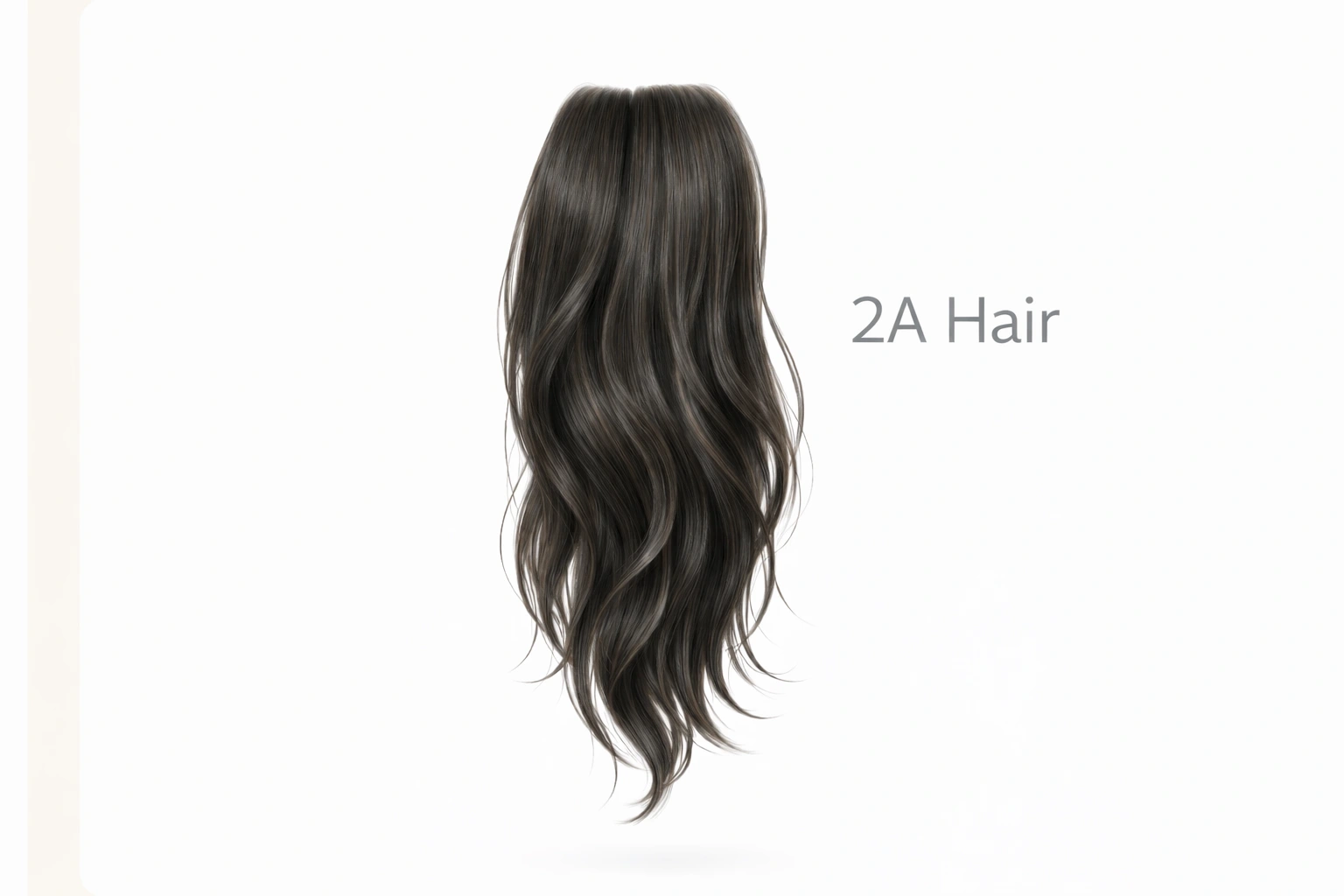
If your hair dries mostly straight but forms soft, loose waves through the lengths, you likely have 2A hair.
This hair type often sits between straight and wavy, which makes it both versatile and sometimes confusing to manage.
Many people with 2A hair are unsure which routine to follow. Should they treat it like straight hair or wavy hair? The wrong choice can lead to flat roots, frizz, or waves that disappear by midday.
Understanding your exact texture is the first step toward better hair health. If you are still unsure where you fall on the texture scale, you can also explore the full guide on types of hair to compare patterns and structure.
This detailed guide explains what 2A hair is, how to recognize it, how to care for it, and how to style it for better wave definition and volume. You will also learn common mistakes and practical fixes you can apply right away.
What Is 2A Hair Type
2A hair is the loosest form of wavy hair. It usually appears straight at the roots and forms gentle S shaped waves from the mid lengths to the ends. The wave pattern is soft and often easy to brush out.
This hair type typically has a fine to medium strand thickness. Because of that, it can become flat or oily faster than tighter wave or curl patterns.
2A hair is part of the type 2 wavy category. Within this group, 2A has the least defined wave compared with 2B and 2C textures.
How to Identify 2A Hair Texture
You likely have 2A hair if your strands show these signs.
Your hair looks mostly straight when wet but develops loose waves as it dries.
The wave pattern is wide and relaxed rather than tight.
Your hair is easy to straighten and does not hold curls for long without styling support.
It tends to lack volume at the roots but may puff slightly at the ends.
If your strands are completely straight with no visible bend, review the guides on 1a hair, 1b hair, and 1c hair to compare texture differences more accurately.
2A Hair vs Other Hair Types
Hair typing helps guide product and routine choices. Small differences in pattern can change results significantly.
2A hair has loose waves and low natural volume.
2B hair shows more visible wave definition and mild frizz.
2C hair has strong waves that may border on loose curls and usually has more body.
Knowing this difference prevents product overload. Heavy curl creams that work for 2C hair often weigh down 2A waves.
Common Characteristics of 2A Hair
2A hair usually has smooth roots and soft movement through the lengths.
It often looks shiny because the cuticle lies relatively flat.
It can become oily quickly at the scalp.
It is prone to losing wave definition during the day.
It responds well to lightweight styling products.
It can become frizzy in humid weather if not sealed properly.
Best Hair Care Routine for 2A Hair
A good 2A routine focuses on balance. You want moisture without heaviness and volume without dryness.
Start with a lightweight shampoo that cleans oil without stripping the scalp. Wash frequency depends on oil production, but many people with 2A hair do well with washing every two to three days.
Use a light conditioner mainly on the mid lengths and ends. Avoid applying thick conditioner directly on the roots because it can flatten your waves.
Once a week, use a gentle clarifying shampoo to remove buildup from styling products. Buildup is one of the biggest reasons 2A waves stop forming properly.
Best Products for 2A Hair
Product weight matters more than product type for this texture.
Look for words like lightweight, volumizing, and balancing on labels.
Choose conditioners with light hydration instead of deep butter based formulas.
Use mousse or light gel for wave definition instead of heavy creams.
Sea salt sprays can help enhance wave pattern, but they should be followed with a light leave in to prevent dryness.
Avoid thick oils and dense butters. These can collapse your wave pattern and make hair look greasy.
How to Style 2A Hair for Better Waves
Styling technique makes a big difference with loose waves.
After washing, gently squeeze out excess water with a soft towel or cotton shirt. Do not rub aggressively.
Apply a lightweight styling product while hair is still damp.
Scrunch upward to encourage wave formation.
Air drying works well for many people with 2A hair. If you use a dryer, a diffuser on low heat helps maintain pattern.
Avoid frequent brushing once dry. Brushing can separate the wave pattern and create frizz.
How to Add Volume to 2A Hair
Flat roots are one of the most common concerns with this hair type.
Use a root lifting spray or volumizing foam near the scalp.
Flip your part to the opposite side while drying to create lift.
Consider layered haircuts, which reduce weight and increase movement.
Avoid sleeping with wet hair pressed flat against the pillow, as this can reduce next day volume.
Common Problems With 2A Hair and Fixes
Frizz is often caused by lack of moisture or too much friction.
Use a light leave in conditioner and avoid rough towels.
Loss of wave definition usually comes from heavy products or buildup. Switch to lighter formulas and clarify weekly.
Greasy roots with dry ends suggest product placement issues. Keep conditioner and stylers away from the scalp area.
Best Haircuts for 2A Hair
The right haircut supports your natural pattern instead of fighting it.
Long layers help waves form without dragging them down.
Medium length cuts often give the best balance of volume and definition.
Short blunt cuts can work but may require more styling for movement.
A stylist who understands texture can customize layering based on density and face shape.
For readers exploring advanced restoration or density solutions, you can learn more about the best hair transplant in turkey through our detailed treatment guide.
Climate and 2A Hair Care
Humidity can increase frizz and reduce definition.
Use anti humidity sprays or light gels to create a protective film.
In dry climates, add a bit more leave in moisture to prevent flyaways.
Sun exposure can dry out the ends, so UV protective hair products are helpful during long outdoor periods.
Mistakes to Avoid With 2A Hair
Using products designed for tight curls is a common mistake. These are often too heavy.
Over conditioning can flatten your pattern.
Heat styling daily can loosen natural waves over time.
Skipping clarifying washes leads to buildup and limp texture.
Brushing dry waves too often causes frizz and separation.
Practical Takeaways for Managing 2A Hair
Use lightweight products and avoid heavy creams.
Condition mainly from mid length to ends.
Encourage waves with scrunching techniques.
Choose layered cuts for more movement.
Clarify weekly to maintain bounce.
Protect hair from humidity and friction.
Conclusion
2A hair is soft, flexible, and easy to manage when you understand its needs. The key is using light products, smart layering, and gentle styling methods that support natural wave formation.
Small routine adjustments can dramatically improve definition, reduce frizz, and increase volume.
When you work with your texture instead of against it, 2A hair becomes one of the most versatile and low stress hair types to maintain.