








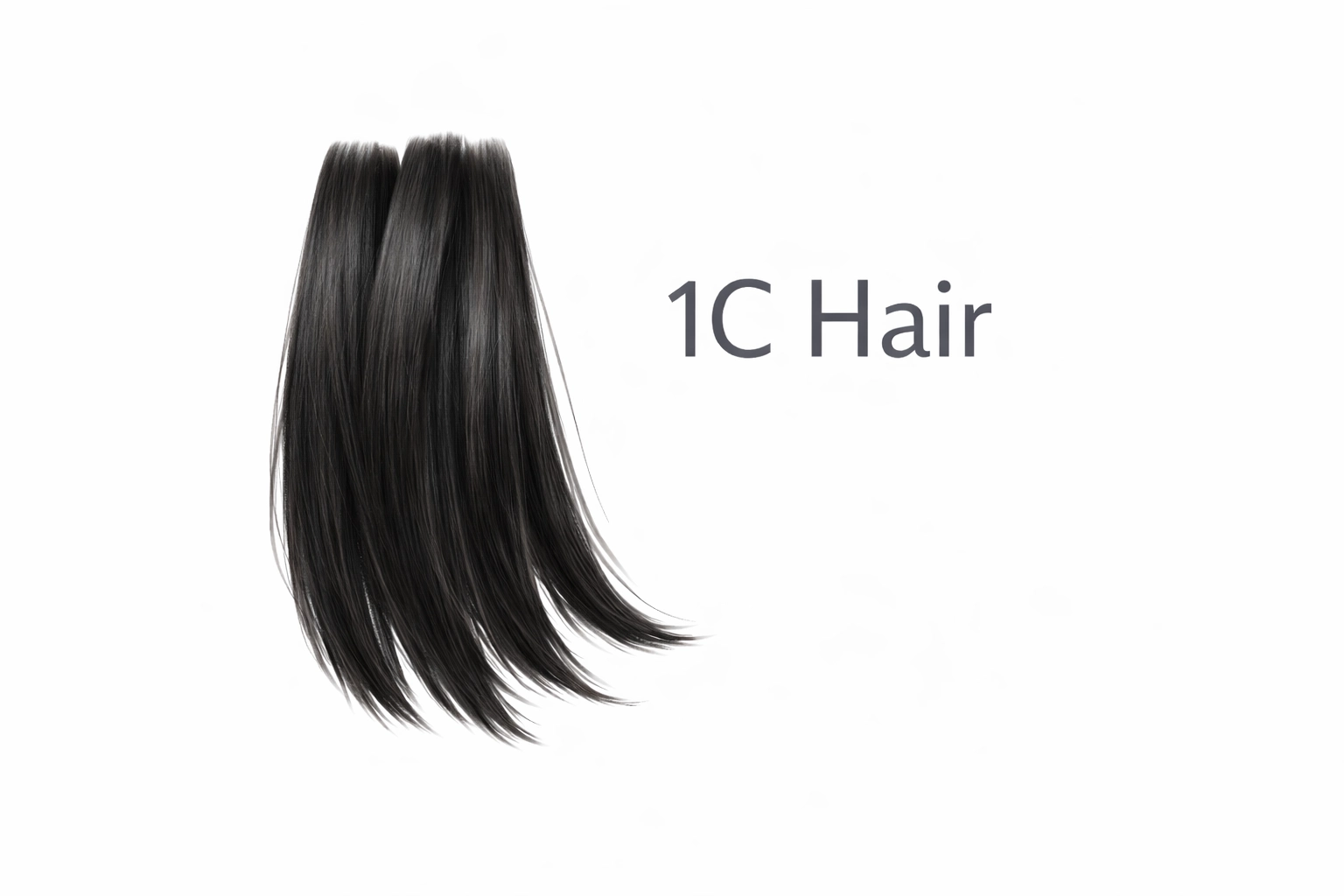
If your hair is straight but feels thick, a little rough, and gets frizzy easily, you may have 1C hair. Many people with this hair type feel confused because it is not completely straight, but it is not wavy either.
1C hair often sits in a grey area of hair typing systems. It can look smooth one day and puffy the next.
It may hold curls briefly but fall flat quickly. Because of this, people with 1C hair often feel confused about how to care for it properly.
This guide is designed to remove that confusion. You will learn what 1C hair really is, how it differs from other hair types.
By the end of this article, you will have a clear understanding of your hair and a routine that works with it, not against it.
What Is 1C Hair
1C hair is part of the Type 1 hair category, which includes straight hair textures. Within this category, 1C is the thickest and most textured type.
Unlike 1A or 1B hair, 1C hair has a slightly coarse feel and natural body. It often appears straight when dry but may develop subtle bends or frizz, especially in humid conditions.
People with 1C hair usually notice that their strands are strong and resilient. However, this strength can come with challenges, such as dryness and puffiness.
Understanding these traits is the first step toward proper care.
Key Characteristics of 1C Hair
1C hair has several defining features that set it apart from other straight hair types.
Thickness and Density
Strands are usually thick in diameter. Hair density is often medium to high, giving the hair a full appearance.
Texture
The texture feels slightly coarse rather than silky. This can make the hair appear rough if not properly moisturized.
Frizz Prone
1C hair is more prone to frizz than other straight hair types. Humidity can quickly affect its appearance.
Volume
This hair type naturally has more volume. While this can be a benefit, it can also lead to puffiness if not styled correctly.
Oil Distribution
Natural oils from the scalp do not always travel evenly down the hair shaft. This can result in oily roots and dry ends.
How 1C Hair Is Different From 1A and 1B Hair
Understanding the differences between straight hair types helps you choose the right products and routine.
1A Hair
1A hair is very fine and completely straight. It lies flat against the scalp and rarely holds a curl.
1B Hair
1B hair has slightly more body than 1A. It may have a gentle bend but remains mostly smooth.
1C Hair
1C hair is thicker and more textured. It has noticeable volume and is more likely to frizz or puff up.
These differences explain why advice meant for fine straight hair often does not work well for 1C hair.
Is 1C Hair Straight or Wavy
1C hair is classified as straight, but it can show slight wave patterns in certain conditions.
After air drying, some people notice gentle bends near the ends. In humid weather, these bends can become more noticeable.
However, 1C hair does not form consistent waves or curls on its own. Any wave pattern is usually temporary.
This makes lightweight styling and proper moisture balance especially important.
Common Problems Faced by 1C Hair
Despite its strength and volume, 1C hair comes with its own set of challenges.
Frizz and Puffiness
Humidity is one of the biggest enemies of 1C hair. Without proper care, hair can quickly lose its smooth appearance.
Dry Ends
Thick strands need more moisture. When natural oils do not reach the ends, dryness becomes common.
Product Build Up
Heavy products can sit on the hair instead of absorbing, leading to dullness and limp strands.
Styling Difficulties
1C hair may not hold curls well, yet it can resist sleek styles if not prepared correctly.
How to Take Care of 1C Hair
A consistent and gentle routine is key to healthy 1C hair.
Cleansing Routine
Wash your hair two to three times per week. Overwashing can strip moisture, while underwashing can lead to buildup.
Use a gentle shampoo that cleans without harsh detergents.
Conditioning Is Essential
Condition every time you wash. Focus on mid lengths and ends, where dryness is most common.
Deep conditioning once a week can help maintain softness.
Moisture Balance
Look for lightweight moisturizers that hydrate without weighing the hair down.
Avoid overly heavy oils that can make hair look greasy.
Best Products for 1C Hair
Choosing the right products makes a noticeable difference.
Shampoo
Opt for sulfate free formulas that gently cleanse.
Conditioner
Lightweight conditioners with smoothing ingredients work best.
Leave In Products
Use small amounts of leave in conditioner or smoothing cream to control frizz.
Styling Products
Serums and light gels help define and smooth without stiffness.
Best Hairstyles for 1C Hair
1C hair works well with many styles.
Layered Cuts
Layers reduce bulk and enhance natural movement.
Long Bobs
This style adds structure without increasing frizz.
Soft Waves
Loose waves created with minimal heat can add interest without stress.
How to Style 1C Hair Naturally
Natural styling focuses on enhancing what your hair already does well.
Air dry whenever possible. Use a microfiber towel to reduce frizz.
Apply styling products to damp hair for even distribution.
Avoid brushing dry hair, as this can increase puffiness.
Heat Styling Tips for 1C Hair
Heat can be used, but with care.
Always apply a heat protectant before styling.
Use lower heat settings to prevent dryness.
Limit heat styling to a few times per week.
Step by Step 1C Hair Routine
- Cleanse with a gentle shampoo
- Condition thoroughly
- Apply leave in conditioner
- Use a smoothing serum if needed
- Air dry or style with minimal heat
Dos and Donts for 1C Hair
Dos
Do moisturize regularly
Do trim ends every few months
Do protect hair from humidity
Donts
Dont overload with heavy products
Dont brush dry hair aggressively
Dont skip conditioning
Can 1C Hair Become Wavy or Curly
1C hair can show temporary waves with certain styling methods.
However, its natural structure remains straight.
Any lasting change usually requires chemical treatments, which should be approached cautiously.
Hair Health, Thinning and Long Term Considerations
Like all hair types, 1C hair can experience thinning over time.
Genetics, lifestyle and health play major roles.
Some people explore medical or cosmetic solutions as part of their hair journey, including options such as a turkey hair transplant for long term restoration.
Frequently Asked Questions About 1C Hair
Is 1C hair rare
It is less common than other straight hair types but not rare.
Does 1C hair need special products
It benefits from products designed for thick or frizz prone hair.
Can 1C hair hold curls
It can hold curls temporarily with proper preparation.
Conclusion
1C hair is strong, versatile and full of potential when cared for correctly.
Understanding its unique characteristics allows you to choose better products, create an effective routine and avoid common frustrations.
With the right balance of moisture, gentle handling and smart styling, 1C hair can look smooth, healthy and full of life.
Whether you are refining your daily routine or exploring long term hair health options, knowledge is the foundation of great hair care.