







Understanding the different types of hair is the first and most important step toward healthy hair care.
Every person has unique hair, but all hair types can be grouped into clear categories based on texture, curl pattern, thickness, color, condition, and styling.
What Does “Types of Hair” Mean?
When we talk about types of hair, we are not talking about just one thing. Hair type can mean:
- The natural shape of the hair strand
- How thick or thin the hair is
- The color of the hair
- How the hair is styled
- The condition of the scalp and hair health
Knowing your hair type helps you:
- Pick the right shampoo and treatments
- Avoid damage and hair loss
- Style your hair more easily
- Keep your hair healthy for the long term
What Are the Different Types of Hair and How Do They Differ
Each of these types has its own texture, behavior, and care needs, which are explained below.
1. Hair Texture and Curl Pattern
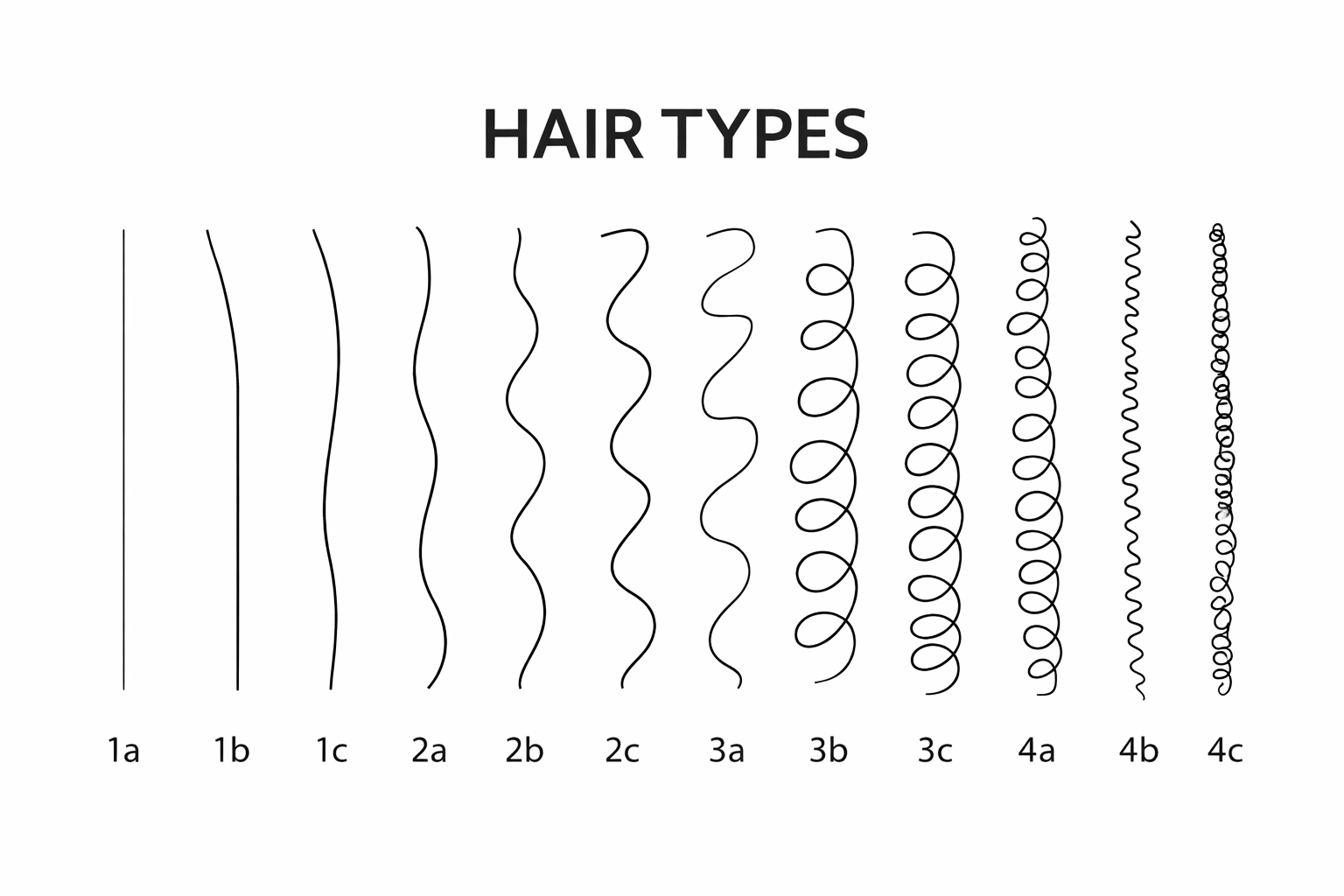
Hair texture refers to the natural shape of your hair strands. This is the most common way to classify hair. Hair texture is genetic and does not change easily.
Type 1: Straight Hair
Straight hair has no curls or waves. It usually looks shiny because scalp oil moves easily from roots to ends. Straight hair can be soft or coarse.
1a Hair
1a hair is very straight, fine, and smooth. It lies flat on the scalp and has very little volume. This hair type does not hold curls well and can become oily quickly.
1b Hair
1b hair is straight but has more body than 1a hair. It can hold light styles and has a bit of natural volume.
1c Hair
1c hair is straight but thick and slightly coarse. It may have small bends and can frizz in humid weather.
Type 2: Wavy Hair
Wavy hair sits between straight and curly hair. It forms loose S-shaped waves and can look flat or frizzy if not cared for properly.
2a Hair
2a hair has loose, soft waves. It is easy to manage and style and usually looks smooth.
2b Hair
2b hair has stronger waves and may frizz easily. It often needs light moisture to stay smooth.
2c Hair
2c hair has deep waves that are close to curls. This hair type is thicker and needs more hydration.
Type 3: Curly Hair
Curly hair forms clear curls or ringlets. It is naturally dry because oils do not move easily down the curls.
3a Hair
3a hair has large, loose curls that are shiny and bouncy. It responds well to moisture-based care.
3b Hair
3b hair has tighter curls with more volume. It may feel dry and needs regular conditioning.
3c Hair
3c hair has very tight curls that shrink when dry. It is delicate and needs gentle handling.
Type 4: Coily Hair
Coily hair has very tight curls or zig-zag patterns. It is the driest hair type and needs deep moisture and protection.
4a Hair
4a hair has small, defined coils. It is soft but fragile.
4b Hair
4b hair has sharp Z-shaped bends and less curl definition.
4c Hair
4c hair has very tight coils with little visible curl pattern. Shrinkage is common, and gentle care is essential.
Coils Hair
Coils hair refers to tightly coiled strands that form spring-like shapes. It overlaps with type 4 hair and benefits from rich moisturizing routines.
2. Hair Thickness and Density
Hair thickness describes the width of each hair strand, while density refers to how many strands grow on your scalp.
Thick Hair
Thick hair has wide strands and often feels heavy and full. It holds styles well but may take longer to wash and dry. Thick hair often needs deep conditioning to stay smooth.
3. Hair Colors
Hair color can be natural or dyed. Color does not change hair texture, but it can affect hair health.
Blonde Hair
Blonde hair ranges from very light to golden shades. It can be natural or dyed and may be more sensitive to damage.
Brunette Hair
Brunette hair includes medium to dark brown shades. It often looks shiny and healthy.
Dark Brown Hair
Dark brown hair is deep and rich in color and is often strong and dense.
Auburn Hair
Auburn hair is a mix of brown and red tones. It is warm and eye-catching.
Red Hair
Red hair ranges from light copper to deep red shades. It is rare naturally and needs color care if dyed.
Pink Hair
Pink hair is a fashion color that can be soft or bold. It needs regular maintenance.
Purple Hair
Purple hair ranges from lavender to deep violet and requires gentle color-safe care.
Silver Hair
Silver hair can be natural or dyed and often needs moisture to prevent dryness.
Burg Hair
Burg hair is a deep burgundy or wine shade that adds richness and depth.
4. Hair Coloring Techniques and Color Styles
These hair types are based on how color is applied, not the color itself.
Balayage Hair
Balayage hair uses hand-painted color for a natural blended look. It grows out softly and needs less frequent touch-ups.
Ombre Hair
Ombre hair fades from darker roots to lighter ends. It is stylish and easy to maintain.
Skunk Hair
Skunk hair features bold, high-contrast streaks that stand out clearly.
Calico Hair
Calico hair mixes multiple colors in separate patches for a creative look.
Brassy Hair
Brassy hair appears yellow or orange due to fading or over-lightening. Proper toning helps reduce brassiness.
Caramel Hair
Caramel hair has warm golden-brown tones that add softness and shine.
5. Hair Styling and Appearance
These hair types describe how hair looks or is styled.
Fluffy Hair
Fluffy hair looks light, soft, and full of volume.
Messy Hair
Messy hair has a relaxed, unstructured look that feels natural.
Shaggy Hair
Shaggy hair has layered ends and a casual appearance.
Tousled Hair
Tousled hair looks gently messy, like hair shaped by wind.
Crimp Hair
Crimp hair has zig-zag waves created by styling tools.
Twist Hair
Twist hair is styled by twisting sections together for definition.
Y2K Hair
Y2K hair includes styles inspired by early 2000s fashion.
Fairy Hair
Fairy hair looks soft and playful with thin, delicate strands.
Wicks Hair
Wicks hair features thick sections separated into bold parts.
6. Hair Condition and Scalp-Related Types
These hair types are based on hair health and scalp behavior.
Greasy Hair
Greasy hair produces excess oil and may look flat. Regular cleansing helps control oil levels.
Ingrown Hair
Ingrown hair grows into the skin instead of outward and can cause irritation.
7. Hair by Ethnicity or Hair System
Some hair types are commonly associated with background or care systems.
Asian Hair
Asian hair is often straight, thick, and strong, with a round strand shape.
CGH Hair
CGH hair refers to hair cared for using curl-friendly routines focused on moisture and gentle care.
How to Identify Your Hair Type
To identify your hair type:
- Wash your hair and let it air dry
- Do not use styling products
- Observe your natural texture and oil level
This will help you understand your true hair type.
Why Knowing Your Hair Type Matters
Knowing your hair type helps you choose the right treatments and prevent damage.
However, if you are already experiencing visible thinning or permanent hair loss, many patients consider the Best Hair Transplant In Turkey as a long term restoration option.
Final Thoughts
There are many different types of hair, and each one needs specific care. Whether your hair is straight, wavy, curly, coily, thick, colored, or styled, understanding your hair type helps you make better care decisions.
For best results, professional hair guidance can help you create a routine that keeps your hair healthy, strong, and beautiful.